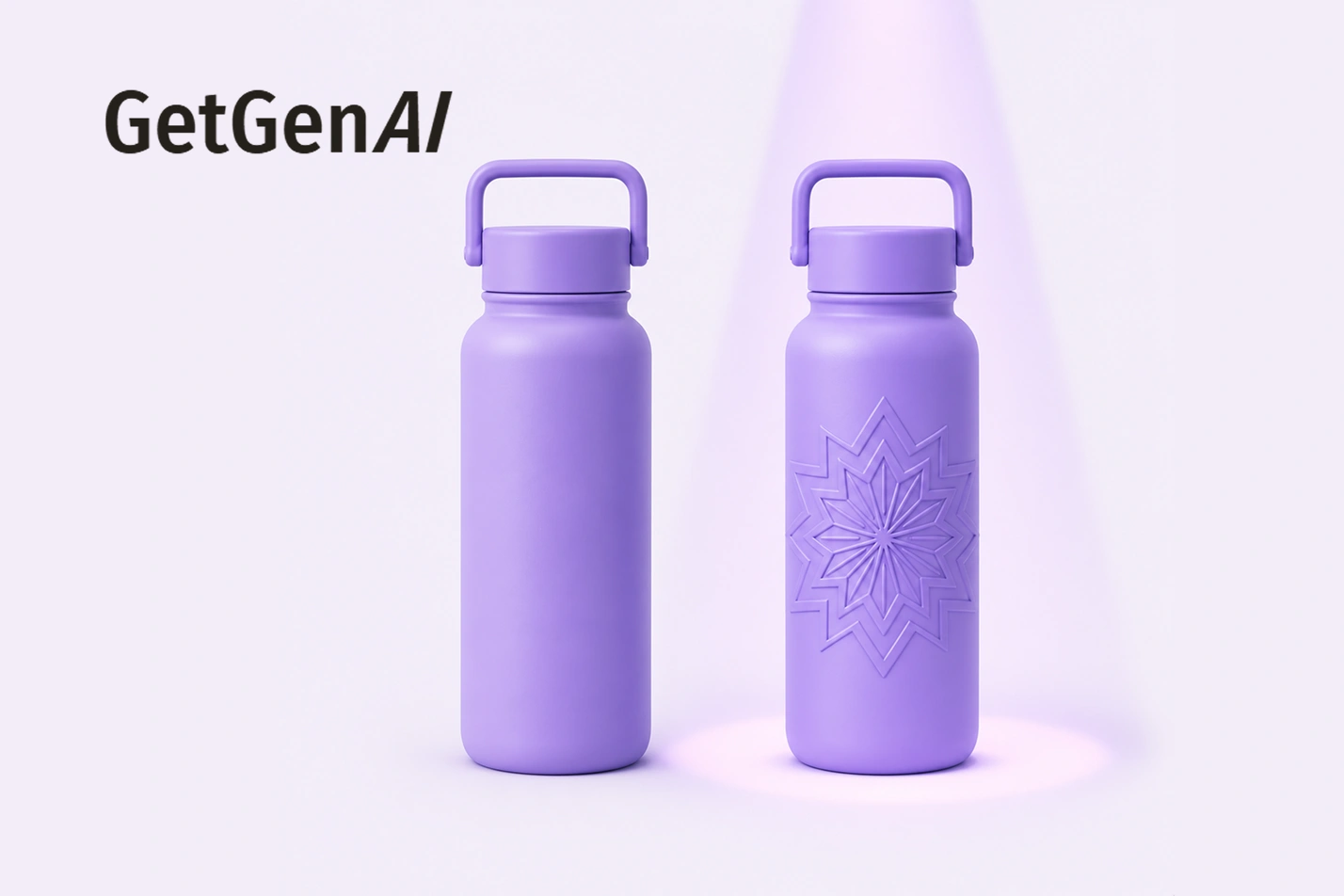
Bottled water overtook carbonated soft drinks as the number-one packaged beverage by volume in the US in 2023, according to the International Bottled Water Association. More market volume means more competition, and in a category where the product itself is functionally identical across brands, the label is doing the commercial work.
Personalized water bottle labels take that dynamic a step further. Instead of a label that identifies a product, they create a label that communicates directly with a specific consumer, event, or campaign. That shift from product identification to personal communication changes how the packaging performs commercially.
Personalized water bottle labels are custom label designs that incorporate brand-specific, event-specific, or recipient-specific elements into the standard water bottle label format. They are widely used for corporate gifting, event marketing, hotel branding, fitness studios, and premium retail packaging.
Why Labels for Water Bottles Personalized to a Brand or Audience Perform Differently
Generic water packaging asks consumers to accept a commodity. Personalized packaging asks them to engage with a brand, an experience, or an identity. The commercial outcomes differ accordingly.
In retail settings, shelf attention is the first commercial hurdle a label must clear. In event or corporate gifting contexts, the label is the primary brand touchpoint of the entire encounter. In both cases, personalization changes the nature of the consumer's relationship with the object in their hands.
The Shift From Functional Packaging to Identity Packaging
A plain water bottle serves the same function as a personalized one. The difference is what happens in the consumer's mind while they are holding it.
Water bottles with personalized labels carry three commercial advantages over generic alternatives:
- Emotional connection: A label that speaks directly to an occasion, a brand community, or a recipient creates a personal relationship with the product that a generic label cannot
- Perceived value increase: Personalized packaging signals investment and care, which transfers as perceived quality even when the product inside is identical
- Brand asset creation: Every personalized bottle that leaves an event, a hotel room, or a retail shelf carries brand identity into a new environment
7 Ways Personalized Water Bottle Labels Transform Packaging into Branding
1. They Turn a Commodity Product into a Brand Experience
Plain water is a functional product. Personalized labels for water bottles make it a storytelling platform. The same 500ml bottle that sits unnoticed on a generic retail shelf becomes a brand touchpoint when it carries a logo, an event name, or a campaign visual that the recipient connects with personally.
The most effective brand experience applications:
- Event branding: Wedding, corporate event, or conference water bottles where the label carries the event identity. Every bottle taken home extends the brand encounter beyond the event itself.
- Hotel and hospitality: Room water with the property's brand creates a premium impression at a very low unit cost relative to other in-room amenities.
- Fitness and wellness studios: Branded water distributed at studios reinforces community membership and turns the bottle into a portable brand advertisement.
2. They Create Instant Shelf Recognition Through Consistent Identity Cues
Personalized water bottle labels that apply consistent brand elements across every variant, the same logo treatment, the same typographic system, the same color approach, train consumers to recognize the brand before they read it.
In retail environments, recognition precedes reading. A consumer who has previously encountered a brand's personalized labels will identify the product in their peripheral vision while still scanning the shelf. This recognition effect builds with repetition. Each encounter with a personalized label reinforces the visual memory.
- Pro tip: The visual elements that drive recognition are not always the ones that get the most design attention. Consistent placement of the logo, a single ownable color, and a distinctive typeface together create more reliable recognition than a complex illustration that changes with each variant.
3. They Enable Campaign-Specific Marketing Without Losing Brand Cohesion
One of the practical advantages of water bottle personalized labels is that they can be adapted for specific marketing contexts without requiring a full design system overhaul.
Applications that benefit from this flexibility:
- Seasonal promotional labels tied to a campaign's visual direction
- Influencer partnership bottles carrying a co-branded label variation
- Regional variants that incorporate local identity elements
- Corporate gifting runs where the recipient's name or company appears on the label
Each variation communicates specificity and investment while maintaining the brand's underlying identity. The structural elements, the placement logic, the typeface hierarchy, and the logo treatment remain consistent. The personalized layer changes what the label says to whom.
4. They Increase Emotional Engagement Through Exclusivity and Recognition
Personalization triggers emotional responses that generic packaging does not. Receiving a water bottle with your name, your event, or your community's identity on the label creates a moment of recognition that generic packaging cannot produce.
This emotional response translates into measurable commercial outcomes. Products in personalized packaging generate higher perceived value ratings than identical products in generic packaging, a pattern documented across multiple consumer packaging research contexts. Personalized water bottle labels make consumers feel considered, and feeling considered creates loyalty.
This effect is strongest in contexts where the personalization is genuinely specific rather than generic. A label that says "Welcome to [Conference Name]" performs differently than one that says "Premium Spring Water." Both are printed labels. Only one creates a personal moment.
5. They Support Premium Pricing Without Changing the Product
A significant practical benefit of water bottle personalized labels is their ability to support higher price points for a product that would otherwise compete purely on price.
Premium positioning through personalized labels works because of the quality signal that custom packaging sends. A brand that invests in personalized label design communicates that it pays attention to detail, which consumers interpret as a signal about product quality regardless of whether the product itself has changed.
This mechanism is particularly effective in the corporate gifting and hospitality channels, where the label is visible to recipients who have no price reference point for the product. The packaging is the product experience in these contexts, and the investment in personalization determines the perceived value.
6. They Build Brand Recall Through Repetition in Consumption Settings
In settings where water bottles with personalized labels are consumed repeatedly, gyms, hotels, offices, and corporate cafeterias, the brand identity gets multiple exposures per purchase decision. Each time a consumer reaches for a bottle, sees it on a colleague's desk, or encounters it in a photo from an event, the visual elements reinforce brand memory.
This repetition effect is why personalized labels for water bottles are particularly effective for brands whose goal is awareness building rather than direct conversion. The bottle travels through environments where paid advertising cannot follow, carrying the brand identity with it.
7. They Support Multiple Label Variants Without Losing Brand Consistency
Brands that run multiple personalized label campaigns simultaneously, across events, regions, channels, and partnerships, need a system that supports variation without fragmentation. A modular personalized label design system defines the elements that never change and the elements that can vary.
| Label Element |
Fixed or Variable |
| Logo size and placement |
Fixed |
| Primary typeface |
Fixed |
| Brand color palette |
Fixed (accent colors may vary) |
| Product name |
Fixed |
| Campaign or event name |
Variable |
| Recipient name or message |
Variable |
| Seasonal imagery |
Variable |
| Co-brand partner elements |
Variable |
This structure allows a brand to run a summer campaign, a corporate gifting series, and a regional variant simultaneously while maintaining immediate visual coherence across all three.
Key Design Principles for Effective Personalized Water Bottle Labels
Personalization creates opportunities, but it also creates risks. Labels that try to personalize too many elements at once lose the visual coherence that makes the personalization feel like a considered brand choice rather than a custom print order.
Five principles that keep personalized labels from losing brand quality:
- Maintain strong visual hierarchy: The brand identity reads first, the personalized element reads second. When the personalized element visually dominates the brand identity, the bottle becomes an event souvenir rather than a brand asset.
- Keep the structural layout consistent across variations: Placement logic, margin conventions, and type size relationships should be identical across every personalized variant.
- Use personalization as an accent, not a replacement: Personalized elements add to the base design. They do not replace the brand identity layer.
- Test readability across bottle sizes: A personalized label that reads clearly on a 500ml bottle may have text too small to read on a 250ml bottle and too large on a 1L bottle. Design the system for all formats.
- Keep compliance information visible and unaffected: Net contents, country of origin, and any regulated content must remain legible regardless of the personalization layer applied.
Personalization Turns a Label Into a Commercial Argument
Water bottles are a commodity. The brands that escape commodity competition are the ones that give consumers a reason to choose them beyond price and availability. Personalized water bottle labels are one of the most cost-effective ways to build that reason.
A well-executed personalized label system creates recognition, emotional connection, and perceived value at a cost per unit that is marginal relative to the commercial outcomes it supports. The discipline that makes it work is consistency: personalization applied within a stable brand system performs; personalization that changes the brand identity with each variant undermines it.
Audit your current label approach against the seven ways above. Identify where personalization is an opportunity you have not yet used, and where existing personalized labels may be drifting from brand consistency.
Keep Your Personalized Water Bottle Labels Consistent and Compliant
GetGenAI checks your label artwork for brand consistency and compliance requirements across all variants before production.
Frequently Asked Questions
How can brands balance personalization with maintaining a consistent brand identity?
Define a fixed layer and a variable layer in the label system before any personalized variant is designed. The fixed layer contains all brand identity elements: logo, typeface, color palette, and structural layout. The variable layer is where personalization happens. As long as the fixed layer is applied identically across all variants, personalization can change significantly without fragmenting the brand identity.
What design elements should never be personalized to avoid compliance or branding issues?
Net contents, country of origin, manufacturer information, and any regulated compliance statements must remain unchanged regardless of personalization. On the brand identity side, the logo, primary typeface, and core color palette should be treated as fixed elements. Personalizing these creates label variants that look like different brands rather than one brand speaking to different audiences.
What are the most common mistakes brands make when creating personalized water bottle labels?
The most frequent errors are allowing the personalized element to visually override the brand identity, producing a custom print rather than a branded product; failing to test the label at actual print size across all bottle formats in the range; and not building a template system before creating variants, which leads to structural inconsistencies between campaigns that accumulate into a fragmented brand visual identity over time.